As e-commerce businesses grow beyond their initial stages, shipping and order management become increasingly complex
operational challenges. What starts as a manageable process of manually printing labels and tracking packages
quickly becomes unsustainable as order volumes increase, product lines expand, and sales channels multiply. Managing
shipping across multiple carriers, comparing rates, printing labels, tracking deliveries, handling returns, and
maintaining inventory visibility across marketplace and direct-to-consumer channels requires specialized tools
designed for high-volume, multi-channel e-commerce operations.
ShipStation is one of the leading shipping and order management platforms for e-commerce businesses, processing
millions of shipments monthly for over 130,000 merchants. Founded in 2011 and acquired by Stamps.com (now Auctane)
in 2014, ShipStation provides a centralized platform that connects to over 180 selling channels, marketplaces, and
shopping carts, aggregates orders from all sources into a single dashboard, compares shipping rates across multiple
carriers, generates discounted shipping labels, and automates repetitive shipping workflows through customizable
rules. The platform serves businesses ranging from small home-based sellers to enterprise operations shipping
thousands of packages daily.
This article provides a detailed examination of ShipStation’s features, carrier integrations, automation
capabilities, pricing structure, and overall value proposition. The goal is to present comprehensive, objective
information that helps you evaluate whether ShipStation can address your shipping and order management challenges.
I. Core Functionality
Order Import and Aggregation
ShipStation’s primary function is aggregating orders from every channel where a merchant sells—Shopify, WooCommerce,
BigCommerce, Amazon, eBay, Etsy, Walmart, Target Plus, Facebook, Instagram, and dozens more—into a single, unified
order management interface. Orders from all connected channels appear in one dashboard with standardized formatting,
eliminating the need to switch between multiple platforms to process shipments. The import process is automatic and
near-real-time for most integrations, with orders typically appearing in ShipStation within minutes of being placed
on the selling channel. Manual order creation is also supported for phone orders, custom orders, or orders from
channels without automated integration.
Carrier Rate Comparison
ShipStation connects to multiple shipping carriers simultaneously, enabling side-by-side rate comparison for each
shipment. Merchants can view rates from USPS, UPS, FedEx, DHL Express, Canada Post, Royal Mail, Australia Post, and
dozens of other carriers in a single view, selecting the optimal option based on cost, delivery speed, and service
level for each order. ShipStation provides deeply discounted USPS rates (through Stamps.com), discounted UPS rates,
and negotiated rates that can result in significant savings compared to retail carrier pricing. The ability to
compare rates across carriers for each individual order ensures that merchants always have access to the most
cost-effective shipping option without maintaining separate accounts with each carrier.
| Feature | Details |
|---|---|
| Selling Channels | 180+ integrations (Shopify, Amazon, eBay, Etsy, WooCommerce, etc.) |
| Shipping Carriers | USPS, UPS, FedEx, DHL, Canada Post, Royal Mail, and dozens more |
| Discounted Rates | Up to 89% off USPS, up to 82% off UPS rates |
| Label Printing | Single, batch, and automated label generation |
| Batch Processing | Process hundreds of orders simultaneously |
| Automation Rules | Custom rules for carrier selection, tagging, notifications |
II. Automation Rules Engine
Rule-Based Workflow Automation
ShipStation’s automation rules engine is one of its most powerful features, allowing merchants to define rules that
automatically process orders based on specified criteria. Rules can be triggered by order attributes including
product type, weight, destination, order value, store/channel, SKU, or customer tag. Actions can include assigning a
specific carrier and service level, applying preset package dimensions and weights, adding insurance, generating
customs documentation, sending confirmation emails, tagging orders for team routing, and setting delivery
confirmation requirements.
For example, a merchant selling fragile products could create a rule that automatically assigns FedEx Home Delivery
with declared value insurance for all orders over $100 containing products with a “fragile” tag, while routing
standard orders under $100 to USPS Priority Mail for cost efficiency. These automation rules eliminate repetitive
decision-making from the shipping process and ensure consistent shipping practices across all orders, regardless of
which team member processes the shipment. For high-volume shippers, automation rules can reduce per-order processing
time from minutes to seconds.
III. Label Printing and Batch Processing
Shipping Label Generation
ShipStation generates shipping labels directly within the platform for all connected carriers, eliminating the need
to visit individual carrier websites. Labels can be printed individually for single-order processing, in batches for
high-volume operations (processing hundreds of labels simultaneously), or automatically through combination with
automation rules. The platform supports multiple label formats including 4×6 thermal labels (the industry standard
for e-commerce shipping), standard paper labels printed on letter-size paper, and international labels with
integrated customs documentation.
Batch Shipping
Batch processing is essential for businesses shipping more than a handful of orders daily. ShipStation’s batch
shipping capabilities allow merchants to select multiple orders, apply shipping presets (carrier, service, package
type, weight), and generate all labels simultaneously with a single click. The batch processing workflow includes
built-in error checking that identifies address validation issues, weight discrepancies, or missing information
before labels are generated, preventing costly shipping errors. For operations processing hundreds or thousands of
orders daily, batch shipping combined with automation rules and thermal label printers creates an efficient
fulfillment assembly line that minimizes manual intervention.
IV. Multi-Channel Order Management
Unified Dashboard
ShipStation’s order management dashboard provides a centralized view of all orders across all connected channels.
Orders can be filtered by status (awaiting shipment, shipped, on hold, cancelled), channel (Shopify, Amazon, eBay,
etc.), date range, ship-to country, and custom tags. Each order displays complete details including customer
information, product details, order notes, and shipping requirements. The dashboard supports custom views and saved
filters that allow team members to quickly access the specific subset of orders relevant to their role or workflow.
Inventory Management
ShipStation includes basic inventory management features that track stock levels across all connected channels. When
an order is shipped, inventory is automatically decremented, and low-stock alerts can be configured to trigger
notifications when products reach specified threshold levels. While ShipStation’s inventory management is not as
comprehensive as dedicated inventory management systems (it does not handle purchase orders, vendor management, or
warehouse location tracking), it provides sufficient visibility for many small to mid-size operations and integrates
with dedicated inventory management systems for businesses requiring more advanced functionality.
V. International Shipping
Global Shipping Support
ShipStation simplifies international shipping by automatically generating customs documentation, including customs
forms (CN22/CN23) and commercial invoices with Harmonized System (HS) codes for tariff classification. The platform
stores product information including declared values, HS codes, country of origin, and product descriptions,
auto-populating customs forms for each international shipment. International carrier rate comparison shows delivery
estimates and costs for different service levels and carriers, helping merchants select the most cost-effective
international shipping option for each destination.
Duties and Taxes
For merchants selling to international customers, ShipStation provides tools for managing duties and taxes
configuration. The platform supports Delivered Duties Paid (DDP) and Delivered Duties Unpaid (DDU) shipping options,
allowing merchants to choose whether to prepay import duties (providing a better customer experience but adding
cost) or have the recipient pay duties upon delivery (reducing merchant costs but potentially causing delivery
delays and customer confusion). Understanding and properly configuring international duties and tax settings is
essential for merchants expanding into global markets.
VI. Branded Shipping Experience
Customization Options
ShipStation offers branded shipping features that help merchants present a professional, consistent brand experience
throughout the shipping process. These features include custom tracking pages branded with the merchant’s logo,
colors, and marketing messages (rather than generic carrier tracking pages), branded email notifications with
customizable templates for shipment confirmation, delivery updates, and delivery confirmation, custom packing slips
with merchant branding, product images, and marketing inserts, and custom return labels and return portals. For
merchants focused on building brand loyalty, these branded touchpoints transform the shipping experience from a
generic logistics process into a brand-reinforcing customer interaction.
VII. Pricing Structure
| Plan | Monthly Price | Monthly Shipments | Users |
|---|---|---|---|
| Starter | $9.99/month | 50 shipments | 1 user |
| Bronze | $29.99/month | 500 shipments | 1 user |
| Silver | $59.99/month | 1,000 shipments | 2 users |
| Gold | $99.99/month | 2,000 shipments | 3 users |
| Platinum | $149.99/month | 5,000 shipments | 5 users |
| Enterprise | $229.99/month | 7,500 shipments | 10 users |
All plans include access to discounted carrier rates, automation rules, and the full range of integrations. The
shipment limits define how many labels can be generated per billing cycle. The discounted shipping rates provided
through ShipStation often offset the subscription cost entirely—businesses shipping regularly typically save more
through carrier rate discounts than they pay in monthly subscription fees.
Pricing accurate as of early 2026 — verify current rates on the official ShipStation website.
Warehouse Management
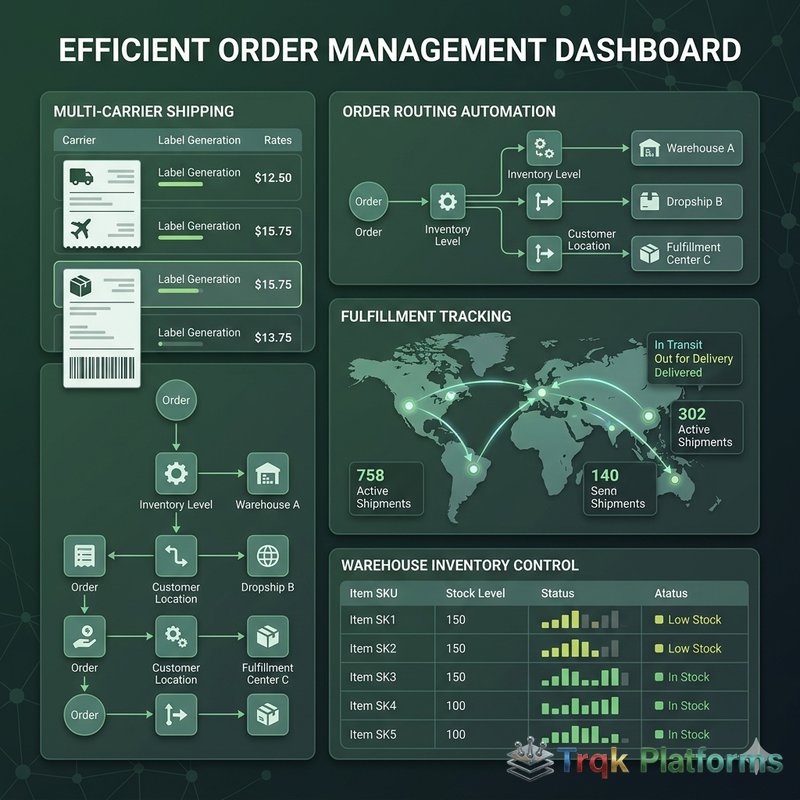
ShipStation supports multiple warehouse locations, allowing businesses that fulfill from different physical locations to route orders to the appropriate warehouse based on inventory availability, customer proximity, or custom rules. Each warehouse can have its own return address, preferred carriers, and automation rules. For businesses with distribution centers in different regions, multi-warehouse support enables optimized shipping by fulfilling orders from the closest warehouse to the customer, reducing shipping costs and delivery times. The warehouse management features include per-warehouse inventory tracking and the ability to assign orders to specific warehouses manually or through automated rules based on geographic zones, product availability, or order characteristics.
Address Validation
Shipping to incorrect or incomplete addresses is a costly problem for e-commerce businesses, resulting in returned packages, reshipping costs, and frustrated customers. ShipStation includes address validation that automatically checks shipping addresses against USPS and other carrier databases, flagging potentially invalid addresses and suggesting corrections before labels are printed. The address verification process catches common issues including missing apartment numbers, incorrect ZIP codes, misspelled street names, and addresses that do not match carrier databases. Merchants can configure how address issues are handled-automatically applying suggestions, flagging orders for manual review, or notifying customers about potential address problems before shipping.
VIII. Strengths and Limitations
Strengths
- Comprehensive multi-carrier rate comparison in a single interface
- Deeply discounted USPS and UPS shipping rates
- Powerful automation rules that reduce manual shipping workflows
- 180+ selling channel integrations for true multi-channel management
- Batch processing for efficient high-volume label generation
- Branded tracking pages and email notifications
- International shipping with automated customs documentation
- Mobile app for shipping management on the go
- Extensive reporting and analytics capabilities
Limitations
- Monthly shipment caps require plan upgrades as volume grows
- Inventory management is basic compared to dedicated inventory systems
- Learning curve for configuring complex automation rules
- Some advanced features require higher-tier plans
- Returns management is less comprehensive than dedicated returns platforms
- Customer support response times vary by plan level
Returns Management
ShipStation provides return label generation and basic returns management capabilities. Merchants can create pre-paid return labels for customers or generate return labels on demand when a customer requests a return. Return labels can be included in the original shipment (pay-on-use labels that are only charged when scanned) or emailed to customers after a return is initiated. The platform tracks return shipments and updates order status when returns are received. While ShipStation’s returns management covers basic return label generation and tracking, businesses with complex return workflows (automated RMA processes, restocking automation, exchange management) may need to supplement ShipStation with a dedicated returns management platform like Loop Returns or Returnly.
Reporting and Analytics
ShipStation provides comprehensive shipping analytics including total shipments and orders by channel, carrier usage distribution and cost analysis, geographic shipping destination mapping, average shipping cost per order, delivered on time versus late delivery rates, and shipping cost trends over time. These reports help merchants identify opportunities for cost optimization, evaluate carrier performance, and make data-driven decisions about shipping strategy. Custom reports can be generated and exported for integration with external business intelligence tools. The shipment cost data is particularly valuable for merchants who want to analyze the true cost of shipping by product, channel, or customer segment to inform pricing and shipping policy decisions.
Team Collaboration Features
For businesses with fulfillment teams, ShipStation provides user roles and permissions that control access to specific features and data. Multiple team members can work simultaneously within the platform, with order assignments and tags enabling efficient workload distribution. Order notes and internal tags facilitate communication between team members without affecting customer-facing information. The activity log tracks all actions taken within the platform, providing accountability and audit trail for shipping operations. These collaboration features are essential for businesses that scale beyond a single-person fulfillment operation and need to coordinate shipping activities across multiple team members or shifts.
Mobile App
ShipStation’s mobile app (available for iOS and Android) provides on-the-go access to order management and shipping functionality. While the mobile app does not replicate the full desktop experience, it enables merchants to view and manage orders, create shipments and print labels (via Bluetooth-connected thermal printers), scan barcodes for order lookup and verification, monitor shipping analytics, and receive push notifications for new orders and shipping events. For small business owners who fulfill orders from multiple locations or need to process emergency shipments outside of regular business hours, the mobile app extends ShipStation’s capabilities beyond the desktop environment.
API and Developer Tools
ShipStation provides a REST API that enables developers to integrate ShipStation’s shipping and order management capabilities into custom applications, internal tools, and automated workflows. The API supports programmatic order creation and management, shipping label generation, carrier rate shopping, tracking information retrieval, warehouse and inventory management, and webhook notifications for order and shipment events. For businesses with custom e-commerce implementations, ERP integrations, or unique fulfillment workflows, the API provides flexibility to incorporate ShipStation’s shipping infrastructure into existing business systems rather than requiring all operations to flow through the ShipStation dashboard.
IX. Alternatives to Consider
Several alternatives serve the shipping and order management space. ShipBob offers end-to-end fulfillment services
including warehousing, picking, packing, and shipping, which is suitable for businesses wanting to outsource the
entire fulfillment process rather than just label generation. Pirate Ship provides free shipping software with
competitive USPS and UPS rates, making it an excellent option for small-volume shippers who do not need
multi-channel order management. EasyPost provides API-based shipping integration for developers building custom
shipping workflows. Shippo offers a similar feature set to ShipStation with competitive pricing and a strong API.
Ordoro combines shipping with inventory management and dropshipping support. The right choice depends on shipping
volume, number of selling channels, warehouse complexity, and whether the business needs label-generation tools or
full fulfillment outsourcing.
The platform’s combination of multi-carrier rate comparison, deep channel integrations, and powerful automation capabilities makes it an essential tool in the e-commerce technology stack for businesses where shipping efficiency and cost management are critical operational priorities that directly impact customer satisfaction and bottom-line profitability.
X. Conclusion
ShipStation provides a robust, feature-rich shipping and order management platform that addresses the complex
logistics challenges facing multi-channel e-commerce businesses. Its combination of multi-carrier rate comparison,
powerful automation rules, batch processing capabilities, and extensive channel integrations makes it particularly
valuable for businesses that sell across multiple marketplaces and direct channels, process more than a few dozen
orders per day, use multiple shipping carriers and need to optimize rate selection, and want to create a branded
shipping experience with custom tracking and notifications.
For e-commerce businesses where shipping efficiency directly impacts profitability and customer satisfaction,
ShipStation provides the tools needed to transform shipping from an operational bottleneck into a streamlined,
automated workflow that scales with business growth.
About The Publisher

TRQK Platforms Editor
The TRQK Editorial Team meticulously investigates and evaluates the world's most powerful digital platforms. Our mission is to provide transparent, in-depth reviews that empower businesses to scale with the right technology.