Business-to-business (B2B) advertising presents unique challenges that differ fundamentally from consumer marketing.
B2B purchase decisions typically involve multiple stakeholders, longer consideration periods, and significantly
higher transaction values. Reaching the right decision-makers—the specific individuals with purchasing authority
within target organizations—requires advertising platforms that can target by professional attributes rather than
just consumer interests and demographics. While consumer-focused platforms like Facebook and Instagram excel at
reaching broad audiences, LinkedIn has established itself as the premier platform for B2B advertising because of its
unique professional data and business-oriented user base.
LinkedIn Campaign Manager is the self-service advertising platform for creating, managing, and analyzing advertising
campaigns across LinkedIn’s network of over 1 billion professional members in more than 200 countries and
territories. The platform enables advertisers to reach professionals based on job title, company, industry,
seniority, skills, education, and other professional attributes that are largely unavailable on other advertising
platforms. Campaign Manager provides tools for creating various ad formats, defining professional audiences,
managing budgets, tracking conversions, and optimizing campaign performance for objectives ranging from brand
awareness to lead generation and website conversions.
This article provides a detailed examination of LinkedIn Campaign Manager’s features, targeting options, ad formats,
lead generation tools, analytics capabilities, pricing considerations, strengths, and limitations. The goal is to
present a comprehensive, factual overview that helps you evaluate whether LinkedIn advertising aligns with your B2B
marketing strategy and objectives.
I. Platform Overview and Campaign Structure
Campaign Hierarchy
LinkedIn Campaign Manager organizes advertising into a three-level hierarchy similar to other major advertising
platforms. Campaign Groups serve as the top-level container, allowing advertisers to organize related campaigns
under a common budget ceiling and schedule. Campaigns define the advertising objective, targeting parameters,
budget, schedule, bid strategy, and placement preferences. Ads contain the actual creative content—the images,
videos, text, and calls-to-action that LinkedIn members see in their feeds.
This structure allows for organized management of complex advertising programs. For example, a B2B software company
might create a Campaign Group for their product launch, containing separate campaigns targeting different audience
segments (C-suite executives, IT managers, and marketing directors), with each campaign containing multiple ad
creatives for testing different messaging approaches.
Campaign Objectives
When creating a campaign, advertisers select an objective that tells LinkedIn’s algorithm what outcome to optimize
for. Available objectives are organized into three categories:
| Category | Objective | Best For |
|---|---|---|
| Awareness | Brand Awareness | Maximizing impressions among target professionals |
| Consideration | Website Visits | Driving traffic to landing pages or blog content |
| Engagement | Increasing post engagement and follower growth | |
| Video Views | Promoting video content to professional audiences | |
| Conversions | Lead Generation | Collecting leads through LinkedIn Lead Gen Forms |
| Website Conversions | Driving specific actions on your website | |
| Job Applicants | Promoting job listings to qualified candidates |
II. Professional Audience Targeting
Targeting by Professional Attributes
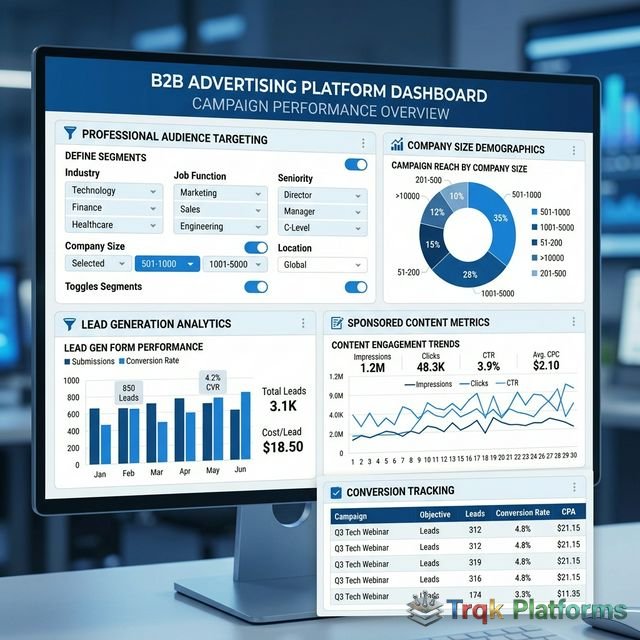
LinkedIn’s targeting capabilities are its most distinctive advantage as an advertising platform. Because LinkedIn
members voluntarily maintain professional profiles with detailed career information, advertisers can target based on
attributes that are unique to this platform. Key targeting dimensions include Job Title (targeting specific roles
like “Chief Marketing Officer” or “Software Engineer”), Job Function (broader categories like “Marketing” or
“Engineering”), Industry (the industry classification of the member’s current company), Company Name (targeting
employees of specific companies by name), Company Size (from 1-10 employees to 10,000+ employees), Seniority Level
(from entry-level to C-suite executives), Skills (professional skills listed on member profiles), Groups (LinkedIn
Group memberships indicating professional interests), Educational institution and degree, and Years of Experience.
This level of professional targeting granularity is unmatched by other advertising platforms. For B2B marketers, the
ability to target by job title, company size, and industry means that ad spend can be concentrated precisely on the
individuals most likely to influence or make purchasing decisions. For example, a cybersecurity company selling
enterprise solutions can target CISOs and IT Directors at companies with more than 500 employees in the financial
services industry—a level of precision that is extremely difficult to replicate on consumer-focused platforms.
Matched Audiences
Similar to other advertising platforms’ remarketing features, LinkedIn’s Matched Audiences allow targeting based on
existing data. Options include Website Retargeting (targeting LinkedIn members who have visited your website,
tracked through the LinkedIn Insight Tag), Contact Targeting (uploading email lists from CRM systems to match
against LinkedIn profiles), Company Targeting (uploading lists of company names to target employees at specific
organizations), and Lookalike Audiences (finding professional profiles similar to your best customers or contacts).
The Contact Targeting feature is particularly valuable for B2B account-based marketing (ABM) strategies, where
advertisers want to reach specific individuals or employees at specific target accounts.
Predictive Audiences
LinkedIn’s Predictive Audiences feature uses AI and machine learning to identify LinkedIn members who are most likely
to take desired actions based on analysis of your existing customer data, conversion data, and lead gen form
completions. By analyzing patterns in your historical conversion data, LinkedIn identifies common professional
attributes among converters and finds additional members who share similar characteristics but have not yet been
exposed to your advertising. This capability extends audience reach while maintaining targeting relevance.
III. Ad Formats
Available Formats
LinkedIn Campaign Manager supports several ad formats designed for different objectives and content types. Single
Image Ads appear in the LinkedIn feed with an image, headline, introductory text, and call-to-action button. Video
Ads support native video content in the feed with various length options. Carousel Ads display multiple cards that
users can swipe through, each with its own image, headline, and destination URL. Document Ads allow sharing of
documents (PDFs, presentations) that users can preview directly in the feed without leaving LinkedIn. Event Ads
promote LinkedIn Events and drive event registrations. Text Ads appear in the right column or top banner of the
LinkedIn desktop interface. Spotlight Ads (Dynamic Ads) are personalized ads that dynamically insert the viewer’s
profile photo and name, creating a personalized experience. Message Ads (formerly InMail) deliver sponsored messages
directly to members’ LinkedIn messaging inboxes. Conversation Ads use a choose-your-own-path message format with
multiple CTA buttons that create an interactive messaging experience.
Lead Gen Forms
LinkedIn Lead Gen Forms are one of the platform’s most powerful features for B2B lead generation. When a member
clicks on an ad with a Lead Gen Form, a pre-filled form appears within the LinkedIn app using data from the member’s
profile—including name, email address, company name, job title, and other professional details. Because the form is
pre-populated with accurate profile data and the member does not need to leave LinkedIn or manually type
information, Lead Gen Forms typically achieve significantly higher conversion rates than traditional landing page
forms. The reduction in friction is particularly valuable on mobile devices, where typing form fields can be
cumbersome.
Leads collected through Lead Gen Forms can be downloaded from Campaign Manager, synced directly to CRM systems
through integrations with platforms like Salesforce, HubSpot, Marketo, and others, or connected through Zapier to
virtually any marketing automation or CRM tool.
IV. Budget and Bidding
Cost Structure
LinkedIn advertising operates on an auction-based system where advertisers bid for ad placements. Ads can be priced
on a cost-per-click (CPC), cost-per-impression (CPM), or cost-per-send (for Message Ads) basis. LinkedIn’s
advertising costs are generally higher than other social platforms—average CPCs can range from $5 to $15 or more
depending on the target audience and competition level—but this reflects the higher value of reaching professional
audiences with specific job titles and decision-making authority. For B2B advertisers, the cost per qualified lead
through LinkedIn can be competitive with or lower than other channels despite higher per-click costs, because the
audience targeting precision reduces wasted spend on unqualified clicks.
Bidding Strategies
Campaign Manager offers several bidding strategies including Maximum Delivery (spending the full budget to get the
most results), Cost Cap (maintaining an average cost per result at or below a specified amount), and Manual Bidding
(setting specific bid amounts for maximum control). The minimum daily budget varies by format but is typically
around $10 per day, and Campaign Groups can set overall spending caps to prevent budget overruns across multiple
campaigns.
V. Tracking and Analytics
LinkedIn Insight Tag
The LinkedIn Insight Tag is a JavaScript code snippet installed on your website that enables website retargeting,
conversion tracking, and website demographics reporting. Once installed, the tag tracks LinkedIn member visits to
your website, associates those visits with LinkedIn profile data, and provides demographic breakdowns of your
website visitors by job title, company, industry, seniority, and company size—even if those visitors did not arrive
through LinkedIn ads. This website demographics feature provides unique professional audience insights that
complement Google Analytics’ consumer-oriented demographic data.
Campaign Reporting
Campaign Manager provides detailed performance reports with metrics including impressions, clicks, CTR, social
actions (likes, comments, shares), conversions, cost per conversion, lead form completions, and demographic
breakdowns of who engaged with your ads. Reports can be filtered by date range, campaign, and demographic
dimensions. The demographic reporting is particularly valuable because it shows whether your ads are reaching the
intended professional audience—for example, confirming that a campaign targeting marketing directors is indeed
reaching people with that title rather than spending budget on less relevant audience segments.
Revenue Attribution
LinkedIn has expanded its attribution capabilities to help advertisers understand the full impact of their campaigns beyond immediate click-based conversions. The Revenue Attribution Report connects LinkedIn advertising data with CRM pipeline and revenue data, allowing advertisers to see which campaigns, ad formats, and audience segments contribute to actual revenue generation. By integrating with CRM platforms like Salesforce and HubSpot, LinkedIn can match ad interactions with downstream pipeline stages including marketing-qualified leads, sales-qualified leads, opportunities created, and closed deals. This closed-loop attribution is particularly valuable for B2B advertisers where the sales cycle can span weeks or months between the initial ad interaction and a final purchase decision, making it difficult to attribute revenue to specific advertising efforts using simpler attribution models.
LinkedIn Audience Network
LinkedIn’s Audience Network extends campaign reach beyond the LinkedIn feed to partner websites and apps, allowing advertisers to reach LinkedIn members as they browse content across the web. When enabled, the Audience Network uses LinkedIn’s professional targeting data to display ads to the same audience segments on third-party publishing sites. This feature can increase campaign reach significantly while maintaining the professional targeting that makes LinkedIn advertising valuable. However, advertisers should monitor performance by placement to ensure that Audience Network placements are delivering results comparable to LinkedIn feed placements, as performance can vary depending on the quality and context of partner sites.
Event Advertising and Thought Leadership Campaigns
LinkedIn Campaign Manager includes dedicated features for promoting events and thought leadership content. Event Ads promote LinkedIn Events directly in the feed, making it easy for members to register without leaving the platform. For webinars, conferences, and industry events that target professional audiences, this integrated event promotion can drive registrations more efficiently than external landing pages because of the reduced friction and pre-filled registration data.
Thought Leadership Ads allow companies to sponsor posts from individual employees-such as executives, subject matter experts, or team leaders-rather than publishing from the company page alone. These ads promote personal posts to broader audiences while maintaining the authenticity and personal voice that typically generates higher engagement on LinkedIn than branded company content. This format is particularly effective for building executive visibility, establishing industry expertise, and humanizing a brand through the voices of its team members. Research consistently shows that content from individual professionals receives significantly higher engagement than identical content posted from company pages, making Thought Leadership Ads an increasingly important format for B2B marketers.
A/B Testing and Optimization
Campaign Manager supports A/B testing through the creation of multiple ad creatives within a single campaign. LinkedIn automatically distributes impressions across creatives and identifies top performers, allowing advertisers to iterate on messaging, imagery, and calls-to-action based on performance data. The platform also provides optimization recommendations based on campaign performance, suggesting adjustments to targeting, bidding, or creative elements that could improve results. Automated bidding strategies use machine learning to optimize bid amounts in real time based on the likelihood of each impression resulting in the desired conversion outcome, reducing the manual optimization burden for advertisers managing multiple campaigns simultaneously.
VI. Strengths and Limitations
Strengths
- Unmatched professional targeting by job title, company, industry, and seniority
- Access to over 1 billion professional members globally
- Lead Gen Forms with pre-filled data deliver high conversion rates
- Website demographics provide unique professional audience insights
- Ideal platform for account-based marketing and B2B strategies
- Professional context where users are in a business mindset
- Matched Audiences enable precise retargeting and ABM campaigns
- Direct CRM integrations for lead data synchronization
- Document Ads enable content marketing within the feed
Limitations
- Significantly higher CPCs compared to Facebook, Instagram, and other platforms
- Smaller audience reach compared to Meta’s platforms
- Minimum daily budgets can be restrictive for testing
- Ad creative options are more limited than visually-oriented platforms
- Interface can be complex and less intuitive than competing platforms
- B2C advertising options are limited—the platform is primarily B2B focused
- Attribution tracking has similar iOS privacy limitations as other platforms
- Learning curve for optimizing campaigns effectively is steeper than some alternatives
VII. Alternatives to Consider
For B2B advertising, several alternatives and complementary platforms exist. Google Ads captures demand from
professionals actively searching for business solutions, products, and services through search advertising. Facebook
Ads can reach professionals through interest and behavior targeting at lower costs, though with less precise
professional targeting than LinkedIn. Microsoft Advertising (Bing Ads) integrates with LinkedIn profile targeting
for search ads, combining search intent with professional data, making it a unique complement to direct LinkedIn
advertising. X (Twitter) Ads can reach professional audiences through interest and keyword targeting, particularly
in technology and business conversations. Industry-specific platforms and trade publications may offer advertising
opportunities that reach niche professional audiences with high relevance. Programmatic advertising platforms can
target professional audiences across the broader web using third-party data, though the accuracy of professional
data outside LinkedIn is generally lower.
For organizations marketing high-value B2B products and services to specific professional audiences, LinkedIn Campaign Manager provides targeting precision and lead quality that justify its premium pricing position relative to broader advertising platforms.
VIII. Conclusion
LinkedIn Campaign Manager occupies a unique and largely uncontested position in the digital advertising landscape as
the premier platform for B2B professional advertising. Its unmatched professional targeting capabilities, powered by
self-reported career data from over a billion members, enable an advertising precision that simply cannot be
replicated on other platforms. The ability to target by exact job title, company name, industry, seniority level,
and company size makes LinkedIn indispensable for B2B marketers pursuing account-based marketing strategies,
enterprise sales, or professional service promotion.
The platform’s higher cost per click compared to consumer-focused alternatives is balanced by the quality of audience
targeting and the professional context in which ads are displayed. For B2B organizations marketing to specific
professional roles and decision-makers, LinkedIn Campaign Manager often delivers the most qualified leads and the
most efficient path to reaching the right people—even if the per-click cost is higher than broader platforms.
Combined with Lead Gen Forms that dramatically reduce conversion friction and professional demographic insights that
no other platform provides, LinkedIn Campaign Manager remains an essential component of most B2B digital advertising
strategies.
About The Publisher

TRQK Platforms Editor
The TRQK Editorial Team meticulously investigates and evaluates the world's most powerful digital platforms. Our mission is to provide transparent, in-depth reviews that empower businesses to scale with the right technology.