Creating content that resonates with audiences and earns engagement across social media and the web requires more
than creative talent alone—it demands strategic research into what topics are trending, what formats perform best,
which pieces of content earn the most shares and backlinks, and who the key influencers are in any given space.
Without data-driven content research, marketing teams risk investing time and resources into content that fails to
gain traction, covering topics that are already oversaturated, or missing emerging trends that competitors
capitalize on first.
BuzzSumo is a content research and discovery platform specifically designed to address these challenges. Founded in
2012 by Henley Wing and James Blackwell and later acquired by Brandwatch (now part of Cision), BuzzSumo has
established itself as one of the most recognized tools for content marketers, SEO professionals, and digital PR
teams who need to understand what content performs well and why. The platform analyzes billions of published
articles, social shares, and backlinks to provide insights into content performance across any topic, domain, or
keyword.
This guide provides a comprehensive overview of BuzzSumo’s core features, including its content discovery tools,
topic research capabilities, influencer identification, content analysis, monitoring and alerts, and competitive
analysis. We also examine the platform’s pricing structure, strengths, limitations, and how it compares to
alternatives in the content research space.
I. Platform Overview and Core Capabilities
What BuzzSumo Does
BuzzSumo operates as a content intelligence platform that helps users answer critical content strategy questions:
What content is getting the most engagement in my industry? Which topics are trending right now? What type of
content formats and headlines perform best? Who are the key influencers sharing content about specific topics? What
content are my competitors creating that earns significant engagement? What questions are people asking about
specific topics?
The platform collects and indexes data from across the web, tracking social media shares (Facebook, X/Twitter,
Reddit, Pinterest), backlinks, and engagement metrics for billions of articles. This data is searchable through
several research tools, each designed for different aspects of content research and strategy development. BuzzSumo’s
data is updated regularly, though the freshness and completeness of social share data can vary by platform due to
API limitations and access restrictions that social networks have implemented in recent years.
Data Sources and Coverage
BuzzSumo indexes content from millions of websites and publications worldwide, covering news sites, blogs, magazines,
forums, and other web publishers. The platform tracks social engagement data including Facebook engagement
(reactions, comments, shares), X (Twitter) shares, Reddit engagement, Pinterest pins, and backlinks from its web
crawling data. It is worth noting that social platform API changes—particularly from Facebook and X—have affected
the availability of some social share data across all content research tools, not just BuzzSumo. Despite these
industry-wide limitations, BuzzSumo remains one of the most comprehensive sources for aggregated content performance
data available.
II. Content Discovery and Research
Content Analyzer
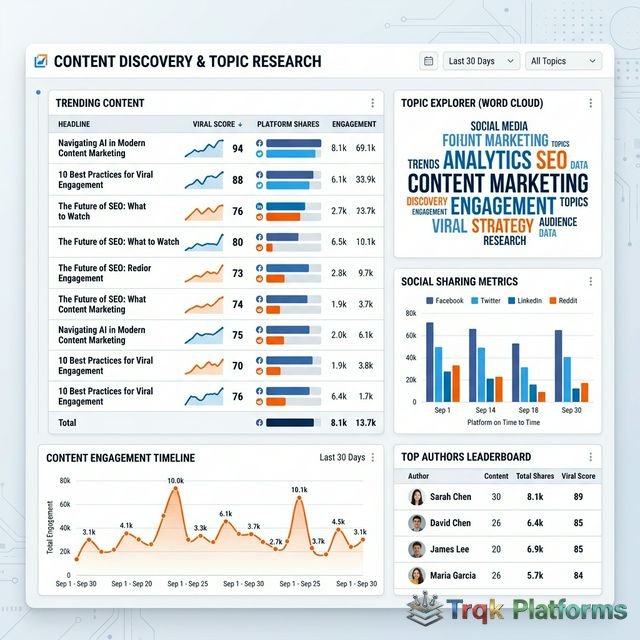
The Content Analyzer is BuzzSumo’s primary research tool, allowing users to search for content by topic, keyword, or
domain. Results display articles ranked by total engagement, showing the headline, publication date, publisher, and
a breakdown of engagement across social platforms. Users can filter results by date range (from the past 24 hours to
the past 5 years), content type (articles, infographics, videos, interviews, guest posts), content length (word
count ranges), country, language, and domain authority of the publishing site.
This tool is invaluable for content planning. By analyzing which articles have earned the most engagement for a
specific topic, content creators can identify successful angles, formats, and approaches that resonate with
audiences. For example, a marketer planning content about “remote work productivity” could use the Content Analyzer
to discover that listicle-format articles with 2,000-3,000 words consistently outperform shorter opinion pieces,
providing data-driven guidance for content planning and creation decisions.
Topic Explorer
The Topic Explorer generates visual mind maps of related subtopics, questions, and themes associated with any keyword
or topic. This tool helps content strategists expand their understanding of a topic area, identify angle
opportunities they may not have considered, and discover the questions that audiences are asking about specific
subjects. The visual format makes it easy to spot content gaps and brainstorm ideas that address specific audience
information needs.
Trending Content
The Trending Now feature surfaces content that is gaining viral momentum in real time, allowing users to identify
emerging stories and topics before they reach peak saturation. This real-time trend identification is particularly
useful for news publishers, social media managers, and content creators who want to participate in trending
conversations early. Trending content can be filtered by topic, country, and source type to focus on the most
relevant emerging stories.
Question Analyzer
The Question Analyzer identifies questions that people are asking about any topic across forums, Reddit, Quora, Q&A
sites, and other web platforms. Understanding the questions audiences ask is essential for creating content that
addresses real information needs and captures search traffic from question-based queries. The tool categorizes
questions by type (how, what, why, when, where, who, which) and shows the forums and platforms where questions are
most frequently asked, providing context for both content creation and platform-specific engagement strategies.
III. Influencer Identification
Finding Key Influencers
BuzzSumo’s influencer research tools identify the most influential people sharing content about specific topics. The
platform identifies influencers based on their social following, engagement rates, content sharing activity, domain
authority of their websites or blogs, and the frequency and relevance of their content sharing. Users can filter
influencers by type (bloggers, companies, journalists, regular people, influencers), location, and activity levels.
Identifying key influencers is valuable for content promotion strategy, outreach campaigns, guest posting
opportunities, and understanding who shapes conversations in your industry. By knowing which influencers
consistently share content about specific topics, marketing teams can develop targeted outreach efforts and build
relationships with the people most likely to amplify their content to relevant audiences.
Content Shared by Influencers
For each identified influencer, BuzzSumo shows the content they have recently shared, their sharing patterns, the
topics they engage with most frequently, and their typical engagement levels. This detailed view helps teams make
more informed decisions about who to approach for content partnerships, guest contributions, or promotional
collaboration. Understanding an influencer’s content preferences and sharing patterns allows teams to craft pitches
and content that are more likely to earn their attention and engagement.
IV. Monitoring and Alerts
Content Alerts
BuzzSumo’s monitoring system sends alerts when new content matching specified criteria is published. Users can set up
alerts for brand mentions (monitoring when your brand or company is mentioned in new content), competitor content
(tracking when competitors publish new articles), keyword mentions (monitoring specific topics or industry terms),
author alerts (tracking when specific influencers or thought leaders publish new content), and backlink alerts
(notifications when new backlinks point to your domain or specific pages).
These alerts serve as an automated content intelligence system, keeping teams informed about relevant new content,
competitor activities, and brand mentions without requiring manual searches. Alerts can be delivered via email at
daily or immediate frequency, and the monitoring dashboard provides a centralized view of all tracked topics and
their recent activity.
Brand Monitoring
For brand reputation management, BuzzSumo’s monitoring tools track mentions of your brand, products, or key
executives across the web. This goes beyond social media monitoring to include blog posts, news articles, forums,
and other web content. Brand monitoring helps PR and communications teams identify media coverage, respond to
mentions in industry publications, spot potential reputation issues early, and track the overall volume and
sentiment of brand-related conversations.
V. Competitive Analysis
Competitor Content Analysis
BuzzSumo allows detailed analysis of competitor content strategies. By entering a competitor’s domain, users can see
their most shared content, publishing frequency, top-performing topics, content formats that earn the most
engagement, and the social platforms where their content performs best. This competitive intelligence helps identify
content gaps where competitors are succeeding but your domain has limited coverage, and it can reveal content format
preferences among your shared audience segments.
Content Comparison
The platform supports side-by-side comparison of content performance across multiple domains. Users can compare their
own domain’s content performance against up to five competitors, analyzing differences in engagement levels,
publishing volume, top-performing topics, and social platform distribution. These comparisons provide objective
benchmarks for evaluating whether your content strategy is keeping pace with competitive alternatives and where
specific improvements could close performance gaps.
Content Format Analysis
BuzzSumo provides detailed analysis of how different content formats perform across various topics and industries. The platform breaks down performance data by content type-including long-form articles, listicles, how-to guides, infographics, videos, interviews, and opinion pieces-showing which formats consistently earn the most social shares and backlinks for specific subjects. This format-level analysis helps content teams make data-driven decisions about whether to invest in video production, long-form written content, visual infographics, or other formats based on what has historically performed best for their target topics.
Additionally, BuzzSumo analyzes headline patterns and structures that correlate with higher engagement. The headline analysis feature identifies common elements in top-performing headlines, such as the use of numbers, emotional language, question formats, or specific word counts. Understanding which headline structures drive clicks and shares in your industry enables content creators to craft more compelling headlines backed by performance data rather than gut feeling. The platform also tracks optimal content length, showing the correlation between word count and engagement for different topic categories, which helps teams determine the right depth and scope for each piece of content they create.
Backlink Analysis for Content
While BuzzSumo is primarily known for social engagement data, the platform also tracks which content pieces earn the most backlinks. This link-focused analysis reveals the types of content that attract organic links from other websites-an important distinction from content that primarily earns social shares. Content that earns both social shares and backlinks typically delivers the highest overall SEO and marketing value. BuzzSumo’s backlink tracking helps content teams identify “link-worthy” content patterns, such as original research, comprehensive guides, data studies, and authoritative resource pages, that tend to attract links from other publishers and bloggers in the same industry.
Chrome Extension and Workflow Integration
BuzzSumo offers a Chrome browser extension that provides instant content performance data while browsing the web. When visiting any article or webpage, the extension displays social share counts, backlink data, and engagement metrics without requiring users to switch to the BuzzSumo interface. This seamless integration into the browsing workflow makes it easy to evaluate content performance during routine web browsing, competitive research, or content curation activities. The extension also allows users to save interesting content to BuzzSumo projects and lists for later analysis and reference, creating a bridge between content discovery and strategic planning that operates within the natural research workflow.
YouTube Analyzer
BuzzSumo has expanded its coverage to include YouTube video analysis, providing engagement data for video content including views, likes, comments, and shares. The YouTube Analyzer allows users to search for top-performing videos by topic, analyze competitor YouTube channels, track trending video content, and identify successful video formats and topics in their industry. As video content continues to grow in importance across marketing strategies, this feature helps content teams extend their research beyond written articles to understand what video topics and formats earn the strongest audience engagement on the world’s largest video platform.
VI. Pricing Structure
BuzzSumo offers four pricing tiers as of early 2026:
| Plan | Monthly Price | Users | Key Features |
|---|---|---|---|
| Content Creation | ~$199/month | 1 | Content discovery, topic research, question analyzer |
| PR & Comms | ~$299/month | 5 | Media database, outreach tools, coverage reports |
| Suite | ~$499/month | 10 | All features, YouTube analytics, advanced reports |
| Enterprise | Custom pricing | Unlimited | Custom limits, dedicated support, API access |
BuzzSumo also offers a limited free tier that allows a small number of searches per month, which can be useful for
testing the platform before committing to a paid plan. The paid plans provide significantly higher search volumes,
more alerts, and access to advanced features. Annual billing is available at a discounted rate compared to monthly
pricing.
Pricing accurate as of early 2026 — verify current rates on the official BuzzSumo website.
VII. Strengths and Limitations
Strengths
- One of the most comprehensive content performance databases available
- Content Analyzer reveals what types of content earn the most engagement for any topic
- Question Analyzer identifies real audience information needs for content planning
- Influencer identification tools help target content promotion outreach
- Monitoring and alerts provide automated content intelligence
- Competitive content analysis provides objective performance benchmarks
- Trending content discovery helps identify viral opportunities early
- Historical data enables long-term content performance analysis
- Intuitive interface with minimal learning curve
Limitations
- Social share data accuracy has been affected by platform API restrictions
- Facebook engagement data is less comprehensive than it was before API changes
- Pricing may be high for individual content creators or small teams
- No content creation, scheduling, or publishing features—strictly a research tool
- Backlink data is less comprehensive than dedicated SEO platforms like Ahrefs or SEMrush
- Daily search limits and alert limits can be restrictive on lower-tier plans
- Some metrics may not accurately reflect organic reach due to social algorithm changes
- Real-time trending data may have slight delays compared to native platform trending tools
VIII. Alternatives to Consider
The content research landscape includes several alternative tools that may complement or replace BuzzSumo depending
on your specific needs. Ahrefs Content Explorer provides similar content research capabilities with the added
advantage of being part of a comprehensive SEO platform that includes backlink analysis and keyword research.
SparkToro focuses on audience research, identifying the websites, podcasts, social accounts, and publications that
specific audiences engage with. Exploding Topics identifies trending topics and emerging themes before they reach
mainstream awareness. Google Trends provides free trending topic data directly from Google’s search engine. Social
Blade tracks social media statistics and growth patterns. ContentStudio combines content discovery with social media
publishing and scheduling. For teams that need both content research and content creation capabilities, some
platforms like SEMrush combine content topic research with writing optimization tools in a single subscription.
IX. Conclusion
BuzzSumo has earned its position as one of the most valuable content research tools available for marketers, SEO
professionals, and content strategists. The platform’s ability to surface high-performing content across any topic,
identify key influencers, analyze competitor content strategies, and monitor brand mentions provides the data
foundation that informed content strategies require. In a content landscape where competition for audience attention
is intense, having access to data about what types of content actually earn engagement gives teams a significant
strategic advantage over those relying on intuition and guesswork alone.
The platform delivers the most value for content marketing teams that publish regularly and want to ensure their
content efforts are informed by competitive intelligence and audience behavior data. While the pricing may represent
a significant investment, the insights BuzzSumo provides can help teams avoid costly content missteps and focus
their creative efforts on the topics, formats, and approaches most likely to succeed. For teams evaluating content
research tools, BuzzSumo’s limited free tier and trial period offer a practical way to test whether the platform’s
data aligns with their content planning needs before committing to a paid subscription.
About The Publisher

TRQK Platforms Editor
The TRQK Editorial Team meticulously investigates and evaluates the world's most powerful digital platforms. Our mission is to provide transparent, in-depth reviews that empower businesses to scale with the right technology.