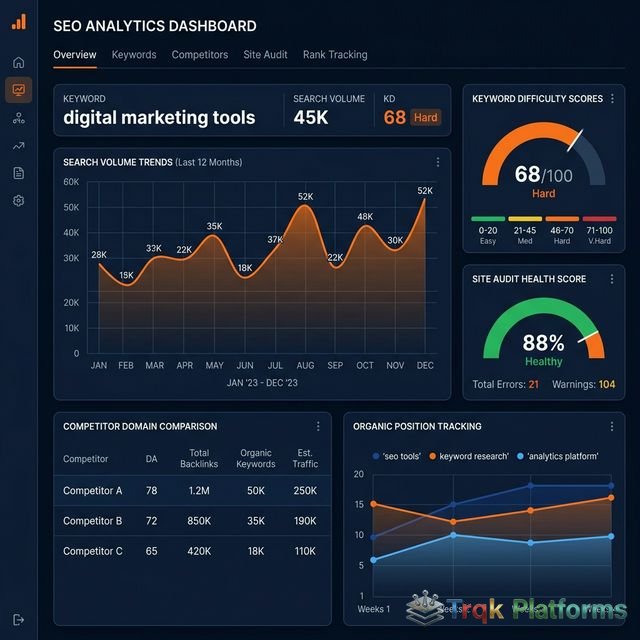
Search engine optimization has become a fundamental component of digital marketing strategy for businesses of all
sizes. The ability to understand how search engines discover, crawl, and rank web content directly impacts a
website’s visibility, traffic, and ultimately its success. However, managing SEO effectively requires access to
accurate data about keywords, competitors, backlinks, technical site health, and content performance. This is where
comprehensive SEO platforms come into play, providing the data and analysis tools that marketers and website owners
need to make informed optimization decisions.
SEMrush is one of the most widely recognized platforms in the SEO and digital marketing landscape. Originally
launched in 2008 as a keyword research tool called SeoQuake, the platform has expanded significantly over the years
to offer a comprehensive suite of tools spanning keyword research, competitive analysis, site auditing, backlink
analysis, content marketing, social media management, and paid advertising research. With a reported user base
exceeding 10 million and a publicly traded company (NYSE: SEMR), SEMrush has positioned itself as a go-to platform
for SEO professionals, digital marketing agencies, in-house marketing teams, and business owners who want
data-driven insights into their online presence.
This guide provides a detailed overview of SEMrush’s core features, toolsets, pricing structure, strengths, and
limitations. The goal is to present factual, comprehensive information that helps you evaluate whether this platform
aligns with your SEO and digital marketing research needs.
I. Platform Overview and Core Architecture
What SEMrush Offers
SEMrush is organized into several major toolkits, each focused on a specific area of digital marketing. The SEO
toolkit includes keyword research, position tracking, site audit, on-page SEO optimization, and backlink analysis.
The Competitive Research toolkit allows users to analyze competitor websites, traffic patterns, and advertising
strategies. The Content Marketing toolkit provides tools for topic research, SEO writing assistance, and content
audit. The Advertising toolkit covers PPC keyword research, ad copy analysis, and display advertising research. The
Social Media toolkit includes scheduling, analytics, and competitive benchmarking features.
This modular architecture means that while SEMrush is often categorized primarily as an SEO tool, its functionality
extends across the broader digital marketing spectrum. This breadth can be advantageous for teams that want a
centralized platform for multiple marketing disciplines, though it also means the platform has a steeper learning
curve compared to tools that focus exclusively on one area like keyword research or backlink analysis.
Data Infrastructure
One of SEMrush’s primary differentiators is the scale of its data infrastructure. The platform maintains databases
covering over 25 billion keywords across 130+ countries, more than 43 trillion backlinks in its link database, and
traffic estimates for hundreds of millions of domains. SEMrush crawls and indexes web pages, advertisements, and
search engine results pages (SERPs) on a continuous basis, which allows it to provide relatively current data on
keyword rankings, competitor positions, and market trends. The accuracy and freshness of this data varies by metric
and update frequency, but the overall scale of SEMrush’s data collection is among the largest in the industry.
II. Keyword Research Tools
Keyword Overview and Analysis
The Keyword Overview tool is typically the starting point for keyword research in SEMrush. Users enter a keyword or
phrase, and the tool returns comprehensive data including search volume (monthly average searches), keyword
difficulty score (an estimate of how hard it would be to rank organically), cost-per-click (CPC) data for paid
advertising, competitive density in paid search, the number of search results, and SERP features that appear for
that keyword (such as featured snippets, People Also Ask boxes, knowledge panels, and image packs).
SEMrush also provides trend data for each keyword, showing how search volume has changed over the past 12 months.
This trend information is valuable for identifying seasonal keywords, emerging topics, and declining search terms.
The tool also displays related keywords, phrase match keywords (variations containing the original term), and
question-based keywords, which are particularly useful for content planning and targeting informational search
intent.
Keyword Magic Tool
The Keyword Magic Tool is SEMrush’s most comprehensive keyword research feature. It generates extensive keyword lists
based on a seed keyword, organizing results into topical clusters and subcategories. For example, entering “project
management” might return clusters like “project management software,” “project management tools,” “project
management certification,” and “project management methodology,” each containing dozens or hundreds of related
keywords with associated metrics.
Users can filter results by search volume, keyword difficulty, CPC, word count, SERP features, and other parameters.
The tool also supports negative keyword filtering to exclude irrelevant terms and the ability to save keyword lists
for ongoing research and tracking. The Keyword Magic Tool can generate millions of keyword suggestions from a single
seed term, making it one of the more powerful keyword ideation tools available in the market.
Keyword Gap Analysis
The Keyword Gap tool allows users to compare the keyword profiles of up to five domains simultaneously. This
competitive analysis feature reveals keywords that competitors rank for but you do not (missing keywords), keywords
where your ranking is lower than competitors (weak keywords), keywords unique to your domain (unique keywords), and
shared keywords where multiple domains compete. This type of gap analysis is particularly valuable for identifying
content opportunities and understanding where competitors are capturing search traffic that could be relevant to
your business.
III. Competitive Analysis and Domain Research
Domain Overview
The Domain Overview tool provides a high-level snapshot of any domain’s search presence, including estimated organic
traffic, the number of ranking keywords, paid search activity, backlink profile summary, top organic keywords, main
organic competitors, and traffic distribution by country and device. This tool is often the first step in competitor
research, providing a quick assessment of a competitor’s search visibility and digital marketing activity.
Traffic Analytics
SEMrush’s Traffic Analytics tool goes beyond search-specific data to estimate total website traffic from all sources,
including direct visits, referral traffic, social media, and paid advertising. The tool provides estimates for total
visits, unique visitors, pages per visit, average visit duration, and bounce rate. It also shows traffic
distribution by channel, geographic breakdown, and traffic trends over time. While these are estimates based on
clickstream data and SEMrush’s modeling, they provide useful directional insights for competitive benchmarking.
The tool also includes a Market Explorer feature that identifies top players in a market segment, audience overlap
between websites, and market trends. This broader market intelligence capability differentiates SEMrush from tools
that focus solely on search engine data and provides additional context for strategic planning.
Advertising Research
For paid search analysis, SEMrush provides tools to review competitor advertising strategies. The Advertising
Research section shows which keywords competitors are bidding on, their estimated ad spend, ad copy variations, and
landing page URLs. The Display Advertising tool reveals competitor display ad campaigns, including ad creatives,
publishers, and targeting strategies. This paid search intelligence is valuable for PPC managers who want to
understand the competitive landscape before launching or optimizing their own campaigns.
IV. Site Audit and Technical SEO
Site Audit Tool
The Site Audit tool crawls your website and identifies technical SEO issues that may affect search engine
accessibility and rankings. The tool checks for a comprehensive list of issues organized by severity, including
critical errors that may prevent indexing, warnings about issues that may negatively impact rankings, and notices
about minor optimizations. Specific checks include broken links and redirect chains, duplicate content and thin
pages, missing or duplicate meta tags, page speed and Core Web Vitals issues, mobile usability problems, HTTPS
implementation issues, sitemap and robots.txt configuration, structured data validation, and crawlability problems.
Each audit generates a site health score and provides prioritized recommendations for fixing identified issues. Users
can schedule recurring audits to monitor site health over time, which is particularly useful for larger websites
where technical issues can emerge as new content is published or site architecture changes are made. The tool also
allows comparison between audit snapshots to track whether issues have been resolved or if new problems have
appeared.
On-Page SEO Checker
The On-Page SEO Checker analyzes individual pages on your website and provides optimization recommendations based on
top-ranking pages for target keywords. Recommendations may include content length suggestions, semantic keyword
usage, readability improvements, technical SEO fixes, and internal linking opportunities. The tool compares your
pages against competitors ranking for the same keywords, providing specific, actionable guidance for improving each
page’s optimization.
V. Backlink Analysis
Backlink Database and Tools
SEMrush maintains one of the largest backlink databases in the industry, with data on over 43 trillion links. The
Backlink Analytics tool provides detailed information about any domain’s backlink profile, including total backlinks
and referring domains, new and lost links over time, anchor text distribution, link type breakdown (text, image,
form, frame), referring domains by authority score, top linked pages, and geographic distribution of linking
domains.
The tool also includes a Backlink Gap analysis feature that compares backlink profiles across multiple domains,
identifying linking domains that point to competitors but not to your website. These represent potential link
building opportunities where outreach may be productive. Additionally, the Backlink Audit tool specifically
identifies potentially toxic or harmful backlinks that could negatively impact your search engine rankings, with the
ability to create a disavow file for submission to Google.
Link Building Tool
SEMrush includes a Link Building tool that combines prospect identification with outreach management. The tool
identifies potential link building opportunities based on competitor backlinks, mentions of your brand without
links, and relevant websites in your industry. Users can manage outreach directly within the platform, track
communication with prospects, and monitor whether acquired links remain active. While this tool does not replace
dedicated outreach platforms, it provides a useful starting point for organizing link building campaigns.
VI. Content Marketing Tools
Topic Research
The Topic Research tool helps content creators identify topics and subtopics that are trending or underserved in
search results. Users enter a broad topic, and the tool generates a mind map of related subtopics, questions people
ask about the topic, related searches, and content ideas organized by their potential impact. The tool also shows
headlines and articles that have performed well for each subtopic, providing inspiration and competitive context for
content planning.
SEO Writing Assistant
The SEO Writing Assistant analyzes content in real time and provides optimization suggestions based on top-performing
content for target keywords. The tool evaluates content across four dimensions: SEO (keyword usage, recommended
length, related keywords), readability (sentence length, paragraph structure, reading level), originality
(plagiarism detection by checking against online sources), and tone of voice (consistency with brand voice
settings). The SEO Writing Assistant integrates with Google Docs and WordPress, allowing writers to receive
optimization feedback directly in their writing workflow.
Content Audit
The Content Audit tool analyzes existing content on your website and categorizes pages based on performance metrics
including organic traffic, backlinks, social shares, and content freshness. Pages are categorized as needing update,
rewrite, removal, or being high-performing. This systematic approach to content management helps identify
underperforming pages that may be dragging down overall site quality, as well as strong-performing content that
could benefit from updates or expansion.
VII. Position Tracking and Reporting
Position Tracking
The Position Tracking tool monitors daily ranking changes for specified keywords across different search engines,
devices, and locations. Users can track rankings at the national, state, city, or even zip code level, which is
particularly important for businesses with local SEO needs. The tool shows visibility trends, estimated traffic
changes, SERP feature appearances, and competitor ranking comparisons over time. Alerts can be configured to notify
users when significant ranking changes occur.
Reporting and Dashboards
SEMrush provides customizable reporting tools that allow users to create branded reports combining data from multiple
SEMrush tools. Reports can be generated manually or scheduled for automatic delivery via email. The platform also
offers a My Reports dashboard builder where users can create custom dashboards displaying the metrics most relevant
to their workflow. For agencies, the reporting tools support white-label customization, allowing reports to be
branded with the agency’s logo and color scheme.
VIII. Pricing Structure
SEMrush offers three main pricing tiers, with prices based on the plan selected and the level of data access and
features included. As of early 2026:
| Plan | Monthly Price | Projects | Keywords to Track | Best For |
|---|---|---|---|---|
| Pro | ~$139.95/month | 5 | 500 | Freelancers, startups, small teams |
| Guru | ~$249.95/month | 15 | 1,500 | Agencies, mid-sized businesses |
| Business | ~$499.95/month | 40 | 5,000 | Large agencies, enterprise teams |
All plans offer a 7-day trial period, and annual billing provides significant savings (approximately 17% discount).
Additional users can be added to any plan for an extra monthly fee. SEMrush also offers a limited free account with
restricted daily queries and reduced data access, which can be useful for testing the platform before committing to
a paid plan.
It is worth noting that some advanced features like the Content Marketing Platform, historical data access, and
extended limits for API calls require the Guru plan or higher. Agencies managing multiple clients should carefully
evaluate the project limits and keyword tracking caps when choosing a plan.
Pricing accurate as of early 2026 — verify current rates on the official SEMrush website.
IX. Strengths and Limitations
Strengths
- One of the largest keyword and backlink databases in the industry
- Comprehensive toolset spanning SEO, PPC, content marketing, and social media
- Strong competitive analysis capabilities with domain comparison tools
- Detailed site audit with prioritized technical SEO recommendations
- Position tracking with granular location-level monitoring
- Content marketing tools integrated into the SEO workflow
- Extensive reporting and white-label options for agencies
- Regular feature updates and data improvements
- Active community, certifications, and educational resources through SEMrush Academy
Limitations
- Higher price point compared to some specialized SEO tools, particularly for small businesses
- The breadth of features can feel overwhelming for users who only need specific tools
- Traffic estimation accuracy varies and should be used directionally rather than as precise figures
- Daily query limits on lower-tier plans can be restrictive for heavy research sessions
- The learning curve is steeper compared to simpler, single-purpose SEO tools
- Some features like the local SEO toolkit and agency management tools require additional subscriptions
- Keyword difficulty scores are estimates and may not perfectly predict ranking ease for all niches
- Backlink data, while extensive, may not capture every link due to the nature of web crawling
X. Alternatives to Consider
The SEO platform market includes several noteworthy alternatives. Ahrefs is SEMrush’s closest competitor, offering a
similar breadth of tools with what many users consider a stronger backlink database and more intuitive keyword
research interface. Moz Pro provides a more accessible entry point with its Domain Authority metric and
beginner-friendly tools, though its data scale is smaller than SEMrush or Ahrefs. SE Ranking offers a more
affordable alternative with solid keyword tracking and site audit features. Ubersuggest by Neil Patel provides a
budget-friendly option with essential keyword and competitor research capabilities. Google Search Console is a free
tool directly from Google that provides accurate (though limited) data about your own website’s search performance,
and it complements paid platforms well for first-party data.
The right choice depends on your specific needs, budget, the scale of your SEO operations, and which tool’s workflow
best matches how your team works. Many agencies and advanced users maintain subscriptions to multiple platforms to
cross-reference data and leverage each tool’s unique strengths.
XI. Conclusion
SEMrush has established itself as one of the most comprehensive platforms available for SEO and digital marketing
research. Its combination of extensive keyword data, competitive analysis tools, technical site auditing, backlink
analysis, and content optimization features makes it a powerful choice for professionals who need a centralized
platform for managing multiple aspects of search engine optimization. The platform’s data infrastructure, spanning
billions of keywords and trillions of backlinks, provides a rich foundation for research and analysis.
However, SEMrush’s comprehensiveness comes with a corresponding complexity and cost that may not be appropriate for
every user. Small business owners with basic SEO needs might find the platform overwhelming and overpriced for their
requirements, while enterprise teams with specific deep-dive needs might supplement SEMrush with specialized tools
in areas like technical SEO or link outreach. The platform offers the most value to mid-sized agencies, in-house
marketing teams, and SEO professionals who regularly conduct keyword research, competitive analysis, and site
auditing across multiple projects.
Before committing to a paid plan, taking advantage of SEMrush’s 7-day trial or free limited account is a practical
way to test whether the platform’s tools and workflow align with your needs. As with any digital marketing tool, the
value you extract from SEMrush depends largely on how deeply you engage with its features and how well you integrate
its insights into your broader marketing strategy.
About The Publisher

TRQK Platforms Editor
The TRQK Editorial Team meticulously investigates and evaluates the world's most powerful digital platforms. Our mission is to provide transparent, in-depth reviews that empower businesses to scale with the right technology.